
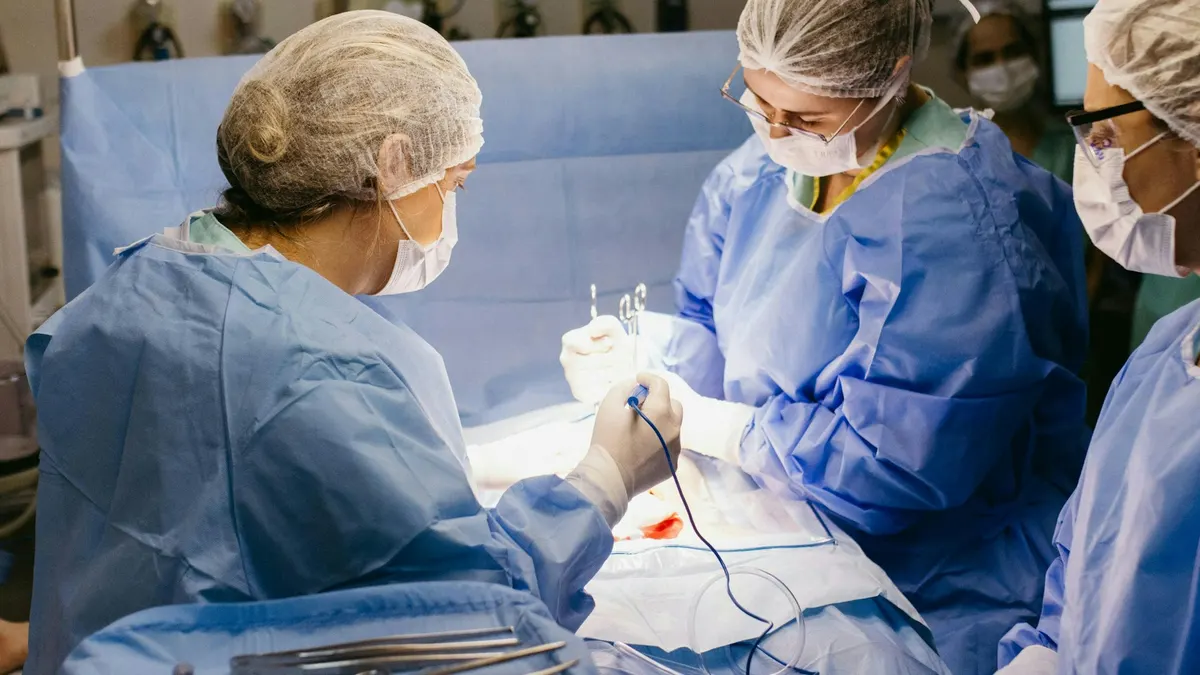
© Look Studio / Unsplash
Buccal fat removal recovery: when results show and the long-term effect
When does swelling go down after buccal fat removal, how many months until the final result, and what its long-term effect involves.
Medically reviewed by Op. Dr. Elvin Əliyev.
After buccal fat removal, swelling is at its peak in the first 1-2 weeks, the incision line inside the mouth usually fully heals within 1-2 weeks, and the final facial contour forms along with the swelling fully going down over 3-6 months. Since this procedure permanently removes the buccal fat pad from the cheek, thinking through the long-term result in advance matters just as much as short-term recovery.
The first days: swelling and mouth care
Since the surgery is done from inside the mouth, there is no visible external scar, but caring for the incision line inside the mouth needs special attention in the first weeks. Rinsing with the antiseptic solution the surgeon recommends at the consultation (usually after every meal) is one of the most important steps for lowering infection risk. Swelling around the cheeks, jaw area, and even spreading to the neck, sometimes with mild bruising, is normal and peaks in the first 3-5 days. A cold compress (never directly, only through a cloth) can help reduce swelling. Sleeping with your head slightly elevated (with extra pillows) can also help swelling feel less noticeable the next morning. If the internal sutures are the self-dissolving type, no extra visit is needed to remove them, but this always depends on the technique and suture material the surgeon chose.
Eating and speaking limits
In the first 1-2 weeks, soft food that requires almost no chewing (purees, soup, smoothies) is recommended, since the chewing motion can put direct pressure on the incision line. Sour, spicy, crusty, and very hot food should also be fully avoided during this period, since it can irritate the tissue inside the mouth. Talking for a long time, smiling widely, or opening your mouth too wide can cause discomfort in the first days, but this is not a strict ban — the load simply needs to be increased gradually and carefully. Avoiding smoking and alcohol also matters during this period, since both can slow healing of the tissue inside the mouth and raise infection risk. Some surgeons do not recommend drinking through a straw in the first days, since the sucking motion can put extra pressure on the incision line.
Weeks 1-4: when the swelling goes down
Most of the swelling usually decreases noticeably over the first 2 weeks, but fine swelling can persist longer, sometimes up to 4 weeks. During this period the facial contour can change day to day, so the shape visible in the mirror at an early stage is not yet the final result. Some patients notice at this stage that swelling does not go down at quite the same pace on both cheeks, which can create a sense of temporary asymmetry and is usually not a cause for serious concern. At this stage, it is also recommended to continue oral hygiene and avoid hard food that requires chewing.
When the final result shows
Full resolution of deep tissue swelling and full stabilization of the facial contour usually takes 3-6 months. During this time, the shape of the cheeks, as expected, gradually becomes more slender and contoured, but because the change is gradual, many patients notice it themselves more than people around them do. To assess the final result, it is recommended to wait for this timeline to fully pass. Comparing the change in facial contour through photos over this period can be useful for some patients, since the daily change is not felt in the mirror but can be much clearer when compared month by month.
Long-term considerations: facial shape with age
The fat removed during buccal fat removal does not come back — this is one of the procedure's permanent effects. This is an advantage for those who want to slim full cheeks at a young age, but it matters to consider in advance that natural, gradual fat loss happens in the face with age. Cheeks already thinned can, years later, combined with the natural aging process, lead to a more sunken, tired look than expected. For this reason, surgeons usually recommend a cautious approach to the amount of fat removed and hold an additional discussion about this with younger patients. Since facial structure, bone structure, and current cheek volume differ for each patient, there is no universal answer to "how much fat should be removed" — this is decided only based on an individual exam.
When to see a doctor
While most of the recovery period passes normally, the following situations call for contacting a doctor without delay:
- High fever or chills
- Foul-smelling discharge from inside the mouth or increasing swelling
- Difficulty moving or numbness on one side of the face that persists for a long time
- Difficulty swallowing or breathing
If any of these signs appear, you should contact the clinic where the surgery was performed without delay.
Frequently asked questions
Does an external scar remain after buccal fat removal?
No, since the incision is made entirely from inside the mouth, no visible external mark remains — only the incision line inside the mouth heals over time.
When does the swelling fully go away?
Most of the swelling decreases significantly within 1-2 weeks, fine swelling can persist for up to 4 weeks, and the final shape becomes fully visible within 3-6 months.
Can the removed fat come back?
No, the removed fat cells never come back — this is one of the procedure's permanent effects, so the decision should be made carefully and thoughtfully.
Is buccal fat removal recommended at any age?
Since natural fat loss happens in the face with age, especially in younger patients the amount of fat removed needs to be planned carefully — this is an important point worth discussing at the consultation.
Is speech or chewing function affected after buccal fat removal?
After a properly performed procedure, these functions return fully to normal, but temporary discomfort can be felt in the first weeks due to swelling.
Since the decision is irreversible, to carefully assess the long-term effect of buccal fat removal and its suitability for your facial structure, you can book a consultation through Dr Plasty. For more, see the buccal fat removal procedure page, and for preparing for surgery, this guide.
This article is for information only and does not replace a medical consultation.
Related procedures


Next step: a free consultation
Fill in the form — our team will contact you as soon as possible with the right specialist, a personal plan and an exact price.
Free
Completely free, no obligation
The right doctor
The right specialist for you
Transparent price
Transparent price — no hidden costs
Confidentiality
Full confidentiality


