
Stretch marks: why they form and what treatment can really do
Why do stretch marks form, which treatments can realistically improve their appearance, and what should you not expect from treatment?
Medically reviewed by Op. Dr. Elvin Əliyev.
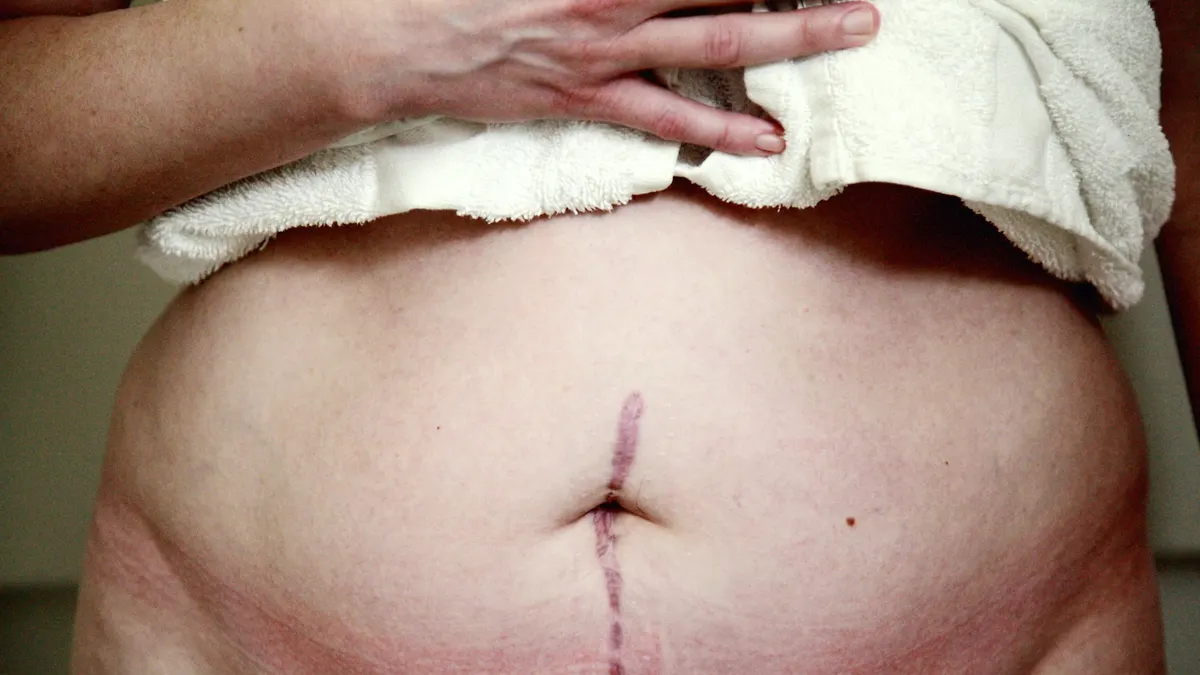
Stretch marks are linear marks that form when collagen and elastin fibers in the middle layer of skin (the dermis) tear under rapid stretching or shrinking of the skin; this usually happens during pregnancy, rapid weight gain or loss, and rapid growth spurts in adolescence, and can appear on many areas of the body — the abdomen, breasts, thighs, arms and lower back. Fresh stretch marks are usually reddish-purple, and over time they fade to a silvery white; treatment is possible at either stage, but results are limited, and complete disappearance is not a realistic expectation. Stretch marks can appear at any age and in any sex, but they are more often seen in women in connection with pregnancy.
Why do stretch marks form?
When skin stretches beyond a certain limit and too quickly, collagen and elastin fibers cannot adapt to the change and tear. This happens more often in the following situations:
- Pregnancy — on the abdomen, breasts and thighs
- Rapid weight gain or loss
- Rapid growth spurts during adolescence
- Rapid muscle mass gain (bodybuilding)
- Long-term corticosteroid use can reduce skin elasticity and raise the risk
- Certain genetic connective tissue disorders can further raise the risk of stretch marks
Genetic tendency also plays an important role — people with a family history of stretch marks have a higher risk, since collagen structure is influenced by inherited traits. Hormonal factors, especially raised cortisol levels, can make normal collagen production harder and reduce the skin's resistance to stretching. This is why two people going through the same weight change can end up with very different degrees of visible stretch marks.
What is the difference between fresh and old stretch marks?
Freshly formed stretch marks (striae rubra) are red, purple or pink, because blood vessels are still visible in the area at this stage. Starting treatment at this stage usually gives a better result, since the tissue is still in an active repair process. Over time, stretch marks fade to a silvery white (striae alba), and at this stage the collagen structure has become more stable, so the response to treatment is relatively weaker. This does not mean the stretch mark has "aged" — the tissue has simply shifted into a new state of balance, so certain treatment options exist for old stretch marks too, it's just that the expectations differ.
What treatment options exist and what do they really deliver?
No method removes stretch marks completely, but they can reduce how visible they are:
| Method | Stage it helps most |
|---|---|
| Retinoid cream (only as prescribed) | Fresh stretch marks (red) |
| Microneedling | Both stages |
| Fractional laser | Both stages, especially old |
| Chemical peel | Fresh stretch marks, mild effect |
Microneedling stimulates the skin's own collagen production, softening the tissue structure of the stretch mark; the micro-injuries created by fine needles trigger the body's natural repair mechanism. The superficial peels described in types of chemical peels only give a mild effect. A fractional laser is considered more effective at reducing color and texture differences on old stretch marks, but it requires several sessions, and the result varies from patient to patient. What all methods have in common is that the result appears gradually and requires patience; expecting a dramatic change after a single session is not realistic.
Most creams sold on the market claim to "eliminate" stretch marks, but the only topical ingredient with clinically proven strong effect is retinoid, and even that gives limited benefit only on fresh stretch marks.
Can stretch marks be prevented?
Preventing them completely is not possible, since the main factor is your genetic skin elasticity, but some habits can lower the risk:
- Gradual weight gain during pregnancy, avoiding sharp jumps
- Keeping up skin moisturizing, since dry skin stretches less easily
- Avoiding too rapid muscle mass gain, choosing a gradual program
- Drinking enough water and eating a balanced diet indirectly supports skin elasticity
These steps do not remove the risk entirely, but they can help the skin adapt more gently to the stretching process and, in some patients, ease the severity of stretch marks. Starting these habits early is especially effective during pregnancy, while the skin has undergone only minimal change so far.
When to see a doctor
Stretch marks themselves are not medically dangerous, but in some cases there can be a separate cause behind them, and this should not be overlooked. It is worth getting a dermatological assessment in the following cases:
- If stretch marks suddenly appear in large numbers and quickly (this can indicate a hormonal issue)
- If there is itching, pain or a sign of inflammation in the area
- If skin irritation continues after self-treatment attempts
- If your skin reaction turns out to be unexpectedly strong after a high-concentration over-the-counter product
- If unexpected skin changes other than stretch marks are also observed
Frequently asked questions
Do stretch marks go away completely?
No, no treatment method removes stretch marks completely. Treatment started at an early stage can significantly improve their appearance, but a full return of the tissue to its previous state should not be expected. Setting realistic expectations matters so you are not disappointed by the treatment process.
Which cream is most effective for stretch marks?
The most clinically supported topical ingredient is retinoid, but even it has a limited effect and only on fresh (red) stretch marks, and it should not be used during pregnancy. Do not use strong retinoid products without a doctor's recommendation, and these ingredients are not recommended especially during pregnancy and breastfeeding.
Is microneedling painful?
A topical numbing cream is usually used during the procedure, which reduces discomfort. Parameters such as needle density and depth are adjusted by the specialist based on the area being treated. Mild redness and sensitivity can last a few days afterward, which usually does not interfere with daily activity.
Do liposuction or a tummy tuck affect stretch marks?
Liposuction reduces fat tissue and does not treat stretch marks. With a tummy tuck, excess skin in the lower abdomen, along with the stretch marks on it, can be excised, but this does not affect stretch marks in other areas. This is not the main goal of either procedure, but an added effect, and it only applies to the area of skin that is removed. It is useful to clarify this difference with your doctor before deciding on surgery. You can book a dermatology consultation through Dr Plasty.
This article is for information only and does not replace a medical consultation.
Related articles

Next step: a free consultation
Fill in the form — our team will contact you as soon as possible with the right specialist, a personal plan and an exact price.
Free
Completely free, no obligation
The right doctor
The right specialist for you
Transparent price
Transparent price — no hidden costs
Confidentiality
Full confidentiality


